By Cantor Michael Zoosman
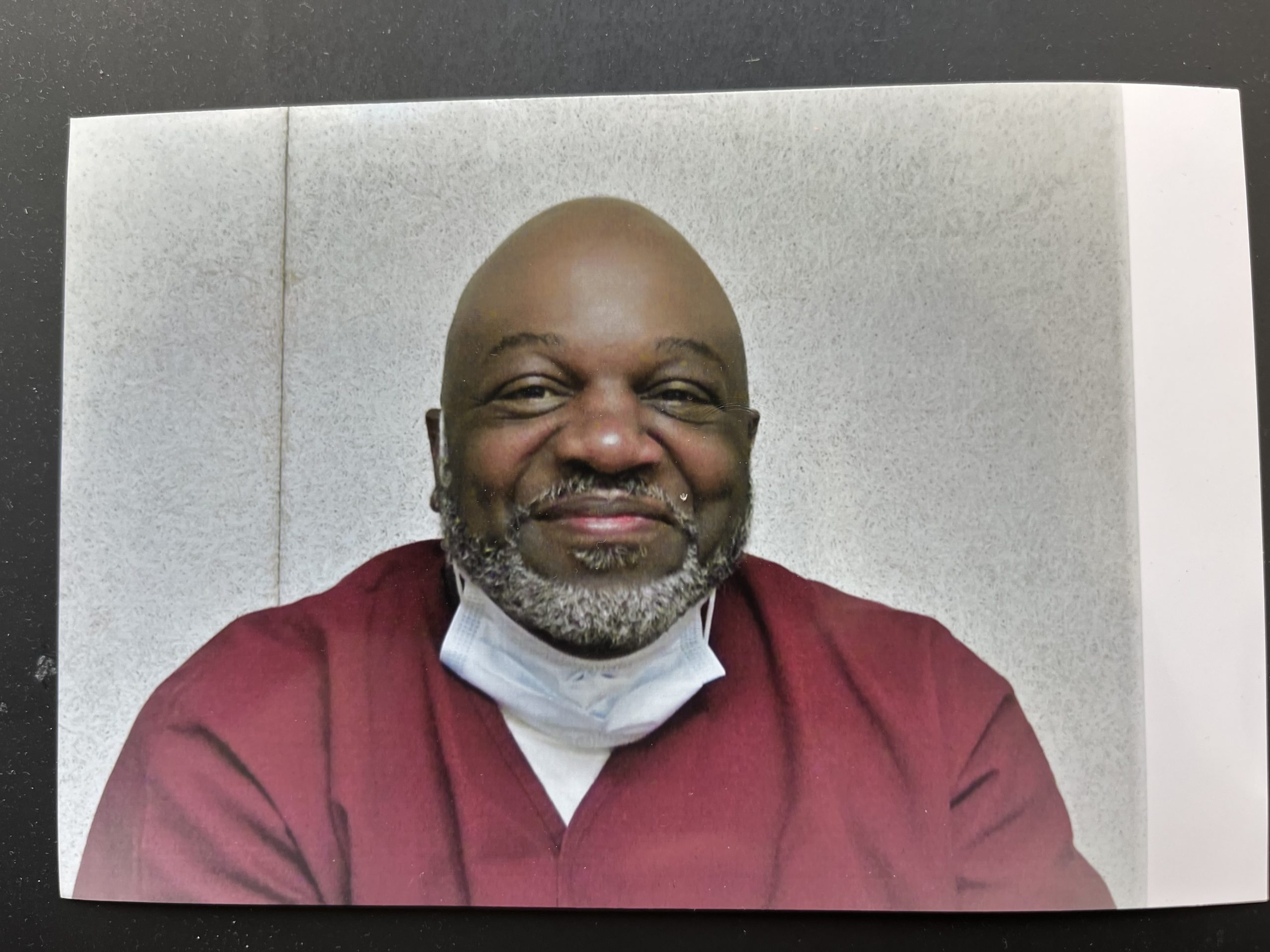
My name is Cantor Michael Zoosman. I am a former prison chaplain, an advisory board member of Death Penalty Action and the co-founder of “L’chaim! Jews Against the Death Penalty.,” where we are in touch with all human beings in our nation who receive an execution warrant. For the past year, I’ve been corresponding nearly daily with Mr. Raymond Johnson, a man condemned to die on Oklahoma’s Death Row. Raymond’s profound faith, his desire to do his best to transform himself in the wake of his crimes, and his modeling and intentions for engage in Tikkun Olam - repairing the world - even from his cell on death row, have struck me deeply as a chaplain and as a fellow human being. Though we come from different faith traditions, I feel connected to Raymond in all these ways and am grateful to have the opportunity here to highlight the person that he has become, today…and what he can offer the world, tomorrow.
Transcript of Audio Interview:
Part 1
Shalom and peace, this is Cantor Michael Zoosman with L'Chaim! Jews Against the Death Penalty and Death Penalty Action here with Raymond Johnson who is on Oklahoma's death row and we're joined by his spiritual advisor Pastor Kurt Borgmann and it's a blessing to be with you both today. Thank you very much for taking the time and enabling this conversation to take place as we want to offer an opportunity for you, Raymond, to have some spiritual thoughts and share some insights as we have worked with you in matters of the spirit to unfold those here.
So I know our time is limited. Without further ado, I will dive in. Perhaps we'll start with the last question that I just had thought of, Raymond. What is the most meaningful scripture, if there's any, for you? I think the scripture that stands out to me most is Psalm 58, 51, 10 and 11. I love the whole chapter, but 10 and 11 speaks directly to me and if I can read it, it says, "created me a clean heart, O God, and renew a right spirit within me. Cast me not away from thy presence and take not the Holy Spirit from me." It resonates with me because so many times people think they are too far from God, but this passage, you know, it's a cry for help from David and David was a man who sought after God's own heart. And so I put myself in his presence in spite of, you know, my wrongdoings. I still try to draw closer to God and know that he's near and dear to me. Amen.
Thank you very much, Raymond, for that. And Pastor Kurt, I'd like to give you a chance as well to offer some questions. Yeah, I want to piggyback onto that. I really appreciate that, Raymond, thinking about that scripture and recognizing that it came to David at a time where he really needed to confront his own deeds and actions and, you know, set a course going forward. And part of setting that course was, you know, confessional, but also, you know, charting a new path. And I guess the question I want to ask is, kind of, what is the new path that you're charting for yourself right now? And maybe another way to ask it would be, you know, what's your growing edge spiritually, maybe relationally? You know, how are you seeking that new path? I've been, first off, I've grown far more than I've ever realized or thought I would grow in life. Like, that's not to toot my own horn or nothing like that. And it has more to do with my community. You know, I'm a part of, I have a great community, a great circle, and that makes me stronger. Because healing starts with self. And having a strong community makes self stronger. It makes me more dependable. You know, I'm held accountable. And as I grow, I don't grow alone. And that's the good thing about community. If I falter, someone's there to minister, be in love, and pick me up. And I keep moving, I keep moving. Where in the past, if I faltered, sometimes my faith stabbed me because I didn't have people to pick me up. So, not only have I grown farther and much more than I ever thought I would, but the biggest part of growth is keeping that. Keeping that growth, which is a daily process. You know, not regressing like I used to do in the past. And that's been my biggest part of growth. Being part of the community helps you to have a wider view of things, doesn't it? I mean, in addition to focusing on your own growth, it also opens you to other people's pain, to the pain of the world, the needs of the world. I think that's an important piece, too, don't you? (4:36) Yes, exactly.
Exactly. And I would like to build upon that as well. You mentioned in the Scripture the story of David HaMelech, King David.
And as is well known, King David is one of the heroes in Judeo-Christian Scripture, and one of the imperfect heroes. And the growth that he had to undergo, the self-awareness after the sin that he committed, particularly relating to Bathsheba and the general Uriah that he sent to the front lines to be killed. And so, when you mentioned this growth, I'm curious to learn more about what are some of the most important lessons? If you can be specific, what are some of the most important lessons that you have learned in this life? I mean, growing up, I would like to use analysis between me and my children's mother. We used to bump heads. We used to bump heads because in society today, nobody wants to be wrong and everybody wants to be right. And we used to get into these arguments, and it was about being right and wrong, and we never got anywhere. And I remember changing the outlook because I was so fed up of arguing. Instead of saying, you're wrong or I'm right, this is wrong, how do we make it right? And we became a team. And when I seen the growth that really came from that, I took that analysis (6:14) and I turned it into my life.
This is wrong, how do I make it right? I did that in life, but more importantly, I did that with myself. Looking in the mirror, seeing the things that was wrong, how do I make this right? And that has helped me grow and grow and grow, and that has been a great lesson in life. And I teach my children that lesson as well, and I see real growth from it. I see the maturation of them having two teenagers that's not in trouble, that's not peer pressure, that's society and everything else. I see the fruits of that labor, of that work. So that's been a big, important lesson to me. I'm not defined off my mistakes. Legacy isn't defined from my worst moments. My legacy is defined how I get back up and continue to move on. And it sounds like the perspective of now having your own children to raise and to model for is a big part of that internal growth as well. Yes. Okay. Yes, because having children is really a chance to relive life for me.
It's a chance to get it right. You know, they can learn from my mistakes instead of having to repeat my mistakes. And that's a lesson.
You know, so I don't grow this for myself, I grow for them as well. Yeah. The sins of the fathers, as they say in Scripture.
Yeah. Thank you. Pastor Kurt, back to you. Yeah, it's interesting that you went to that, Raymond, to talk about parenting, because that was on my list of questions, too, about, you know, how does that, how does parenting affect you? And what do you think you're offering to your children, especially parenting from this separation that you have? How do you work at that? How do you stay close to what's happening with them? How do you continue to build trust and confidence in what you're offering them? I guess it's sort of a broad, you know, varied question, but talk a little more about the parenting piece and what that means to you. First off, you know, I grew up believing someone was my dad until him and my mom got a divorce, and I found out he wasn't my dad. And I wasn't given the identity of my dad because he was in prison and probably would have been in prison for my life. And so I knew how it helped me. But then when I had the opportunity to still be in my kids' lives, in spite of my situation, I knew I had to make it count. So I wasn't just doing it for me and my kids, I was doing what I want. And me and my kids have such a beautiful relationship, because first and foremost, I always listen. I'm attentive, because I know they, I know what it feels like to want to be heard, and I make sure they're heard. So if I listen to them, and then I don't literally tell them what to do. I listen to them and I say, okay, well, this is what daddy was doing, this is what I would do. And I think a lot of times because they're heard, they hear me. And it's like, if we grow together, it goes back to that growth.
As I grow, my kids grow right along with me. They're learning from my mistakes. And this is what I did in the past, and this is what I would do now if given the chance. You have the chance, what do you choose to do? So it's like, I'm not just telling them what to do, I'm helping them to have a process, to learn how to process things, because I know that I might not be here. And I want them to have those tools to be able to break down and be better in life. Okay.
Thank you, Raymond. It relates a little bit to my next question, which is, you know, over time, how you have changed? And it comes from within the Jewish framework, this idea...
You have one minute left. Okay. Well, maybe what we'll do is we'll initiate another call. How does that sound?
Okay. Is that okay? So, Kurt, you would call us back? Yes, I'll call back. We'll just start it out a little.
Okay. Okay. All right.
Thank you. All right. Yep.
Bye for now.
Interview with Raymond Johnson Pt. 2
Okay, thank you very much again Raymond and Pastor Kurt. Following up on the last answer you gave, I'm interested in learning a bit more about just how you've changed from the person who harmed others in the past. You've already started explaining about how listening and becoming an active listener with your children has changed who you are.
In the Jewish tradition one of the highest levels of repentance that can be earned is when a person, God forbid, is faced with the same challenge or temptation, if you will, to do the same wrong again but then turns the other way and doesn't do that. And so that's the lens that I'm coming from with this question. How do you feel you've changed from the person who harmed others in the past? It's been a process, I won't lie.
I remember when I was joined in the Church of the Brethren and Pastor Kurt and I took a journey, you know, learning about being a Brethren and everything else. I remember when he told me that the Brethren was pacifists, and I was like, oh, I'm gonna struggle with this, you know, because all my life I've had a problem with turning the other cheek. And I tried to accept everything of being aBrethren for that, but then it just didn't better than me, being a part of the right community.
And I've changed so much where I'm not the person that hurts people. I'm the person that helps people. Helps people heal, you know, aid people.
You know, here since being on death row, again, you know, I go to what people would say, what they would do if they got off death row and if they got out. I can say what I will continue to do because it's already my lifestyle, you know. I don't just look out for myself, I look out for other people here in this community.
I visit with the ACLU and I help, right, not just the death row here, but for the rights of the whole prison, you know. I go to church and, you know, continue the fellowship, you know, with the guys, you know, not just those that come to the church, but to come as well. And then a point that Pastor Kirk can attest to, I think the major part of my ministry isn't just here, but out there.
I'm humbled by how many doors God has opened for me to be able to minister on the outside as well and show people that we're not beyond redemption. And that comes with that change. It's a lifestyle now where it wasn't a lifestyle in the past.
I won't lie, it was skills. It was seasons of me doing good and then something happened and me, you know, have an excuse to fall back. Now if I get hurt, I don't revert.
I just lean in even harder, and that's the part of that great change. I see. Okay.
Thank you. Pastor Kirk. I want to turn a little bit and ask you a question, Raymond, about living under a death sentence.
You know that off into the future, and it's not, you know, it's not the indeterminate future, it'sbecause there's a fixed point where the state is planning to execute you. And I want to ask you or invite you at the opportunity to talk a little bit about what it's like to live under a death sentence, what that does to you psychologically, and how you cope with that. It's like a wound and a burden at the same time.
A wound that doesn't heal. A burden that I carry daily. Because having done so much to, because I can't undo what's done, that puts me here. But then living with it psychologically, I'm more worried about what it would do to my kids, to my loved ones, to those whose lives I've impacted. Like, that's the burden. That's the wound, because it's like, regardless of how much change, you know, if it comes to that, it's going to hurt.
And I know grieving, we grieve different people differently. And some people, no matter what, we simply can't get past that. And so that's the burden and the wound, you know.
How lucky is that, you know? Praying and praying that they don't lose faith or lose hope or losethe lessons. You know, that's the, it's a burden. It's a big, big, big burden, you know.
And I just pray and I live with faith that, you know, people will be strong enough to continue on and carry my legacy. You know, what's interesting about your answer, Raymond, to me, is that it's notabout the burden of dying, you know, facing your own death. It's the sadness that you have for those that you love, and how this affects that recognition of what it means to be connected to each other, and how grief, then, is something that we have to share together.
And the pain that you describe is the pain that you have for them. Yes. Yes.
And to pick up on this idea of burden, and you mentioned at the beginning of your last answer, Raymond, that you can't change what has been done in the past, despite the, you know, what your heart would want to do to change. You can't change what has been done. But I want to invite you here and now, as we explore, you know, the matters of the Spirit and the great mysteries, that if you could have in front of you those individuals that you've harmed, or their loved ones, if they would be, as if, with us now, what would be your message to them? I apologize.
No excuses, no justifications, a sincere apology. And to know that it's sincere, look at my actions. Look at my life.
Look how I've changed. I'm living a remorseful life. I'm living it.
You know, that's the proof for me. In prison, you know, I haven't been in another prison in the majority of my life. Some people don't understand this, but I've seen innocents become guilty, and I've seen guilty become innocent.
And when I say that, I've seen people that come in and claim innocent, or the people that come in and be innocent, and then get grafted into the guiltiness of what prison life can be. I've seen people come in and be guilty, and get grafted into the innocence, and the remorse, and the rehabilitation. And even more, when I speak of change, and remorse, and everything else, I've had to do this on my own, because here we don't have programs.
None whatsoever. We're just getting religious services, you know, back to us after about a 10-year span. So all the work I've done, I had to initiate myself.
They just housed us, you know, and let us move on. So my lifestyle, my change, what I'm living, how I'm living, that's showing proof that I'm remorseful. That's showing proof that my apology is sincere.
Okay. I thank you, Raymond, and I want to turn back to you, Pastor Kurt, if you had any any other questions. I just have one last question.
It's kind of a broad one, but a little while ago, you used the word hope, Raymond, and I'm wondering how you understand that word, hope. Hope is a desire or expectation of fulfillment.And it's funny, because I'm in what everyone would deem a hopeless situation, but yet I have hope, you know, and the peace that God has given me helps me have hope, you know, when I speak of the change and everything else.
I'm not doing it just to be seen, but if it's seen. You know, we speak about, you know, the spiritual aspect as good as I'm speaking to Cantor Zoosman and my pastor. It's like some of the greatest sermons that that we hear, how can I say this? Let me change my words quickly.
I tell some people some of the greatest sermons ain't heard, they're lived. They're lived. And that's where hope comes in, you know.
Not the words. Not the words, but the actions being lived. And even if men don't see it, I know God does.
I know God does. Raymond, I think that one of the things from my observation of you that you hope for is that what you do from here on makes a good difference in the world, that it matters, that it extends the ministry, the Spirit of Christ, the way we would put it. That's a spirit of reconciliation, a spirit of peace, a spirit of healing.
Those are things that we have talked about that I hope for and that you hope for and that we together share. I want to leave the world a better place in spite of my situation. I want to and I know that I can.
And people will look at my situation and say, well, how can you do that? Just act. Just act. You know, success is where somebody failed and kept on trying and kept on trying.
And that's what I'm doing. I'm going to succeed because I'm going to keep on trying. Every day I get up, I try to be the best version of myself I can be.
Some days I fail, but guess what? I continue to keep on going. I continue to keep on going. Thank you.
Just act, as you said, and I couldn't help but think while you were explaining and responding to that question of, from the Jewish tradition, Rabbi Abraham Joshua Heschel, when he marched with Martin Luther King Jr., famously, in the South during the Civil Rights era, he said, we were praying with our feet. We were praying with our feet. And so it's this model of action, you know, of the proof being in the pudding, right, of how we act.
Raymond, that was the last question as well that I've had on my list, but I wanted to mention here, I think it's appropriate, today as we record this, it's June 11th, 2024. It's the eve of a Jewish holiday in my tradition, and unfortunately it's also the eve of another execution in this country. A pen pal of mine named David Hosier in Missouri is scheduled for execution in just a few hours from now.
And I know that how prayerful that you are, and I want to open this up for you if you'd like to offer a prayer, a prayer for David, and just send out that energy into the world with us now. Yes. Thank you.
Father God, I come to you right now, just thank you for another day that wasn't promised, and ask you for forgiveness of my sins, for I was in shortcomings so that my prayer would not go unheard. And Father God, we bring your brother to you right now, and we plead the blood of Jesus on his life right now. Father God, we know that man can close all doors and you can open.
You are the God of the impossible. Nothing is too impossible for you, and so we ask that you step in right now and have your way. We live in a world full of hate, of revenge, justice masked as revenge, and we pray that it cease.
We pray that it come to a head instead of hate for hate and violence for violence. We need to learn to love more in action and in deed, and we need change, but it has to start somewhere. But if you choose not to stop this execution, we ask that you would embrace him in your arms, dear Father, and that his life not be in vain.
This is my prayer. This is my praise, and I ask you for many other blessings. In Jesus' name we pray.
Amen. Amen. May it be so, and I thank you so much, Raymond, and I can't help but, as you're saying that, be reminded that you mentioned at the start King David, and here we have another David, and one of the psalms that we're going to recite for him is the Psalm of David, Psalm 23, as well, Into the Valley of the Shadow of Death.
And so I pray that your faith will sustain you in that valley and that the world will hear your voice, and I want to offer an opportunity as well, Pastor Curt, if there's anything that you might wish to close with. Just so grateful for a chance to have this conversation, to share our thoughts, to share our spirit together, and grateful to you, Mike, for being with us, and glad to be on this journey with Raymond, and just wanted to express that, and we offer our peace and love to each other and to those in the world who are struggling and suffering now. Amen.
Thank you, Raymond. Do you have any other thoughts you wish to share? No, thank you. I just appreciate this opportunity.
Thank you both for this opportunity. Okay, you're very welcome, and wish you every blessing. Amen.